
Inside the Lawrence County Most Wanted Program
The Lawrence County Sheriff's Office posts no public warrant roster, no most-wanted page, no name search, and no downloadable list. Its website describes warrant service and gives agency contacts, but a roster is not among them. So a Lawrence County warrant search starts with the offices rather than with a published list. That absence is the honest local answer. A most-wanted program, where one runs, is selective by design. An agency highlights certain cases for investigative or public-safety reasons. It never mirrors the court docket, and it cannot cover every active warrant. Any third-party list you stumble on is not the county's own record. Treat it, at most, as a lead worth verifying with the officials who hold the file.
No Lawrence County Public Roster
The official Communications page documents the warrant-maintenance role.
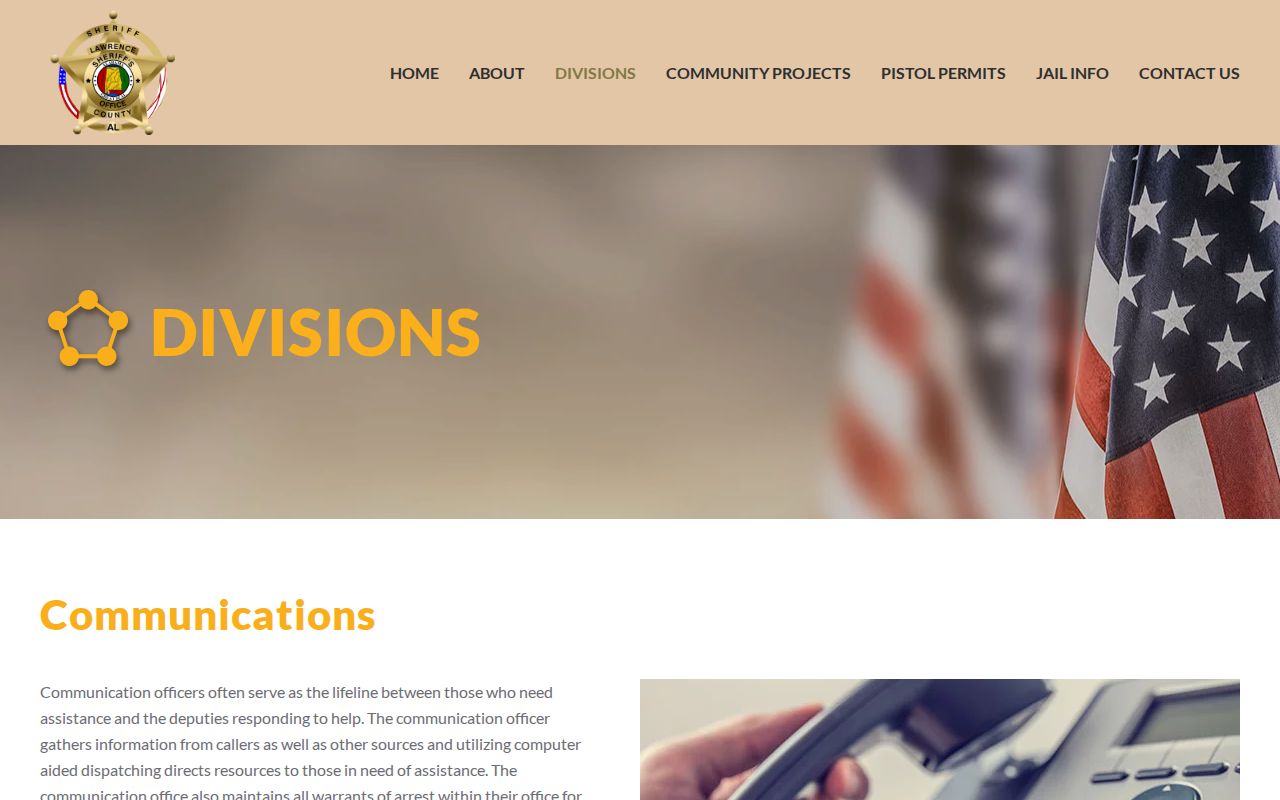
The Lawrence County Sheriff's Office is the county's official law-enforcement source. Its pages list arrest-warrant service among the office's duties, and Communications maintains the arrest warrants for service. What it does not offer is a public list. Neither the home page nor the division pages publish a warrant roster or an update schedule. A phone call comes first.
Key point: A third-party “Lawrence County most wanted” page is not proof of an official Alabama roster or current warrant status.
One official fact explains the gap. The Lawrence County magistrates page states that an arrest warrant is not public until served. A blank web search can mark a lawful access boundary, not a failure.
How Lawrence County Most Wanted Lists Work
Lawrence County publishes no selection method, update cadence, reward practice, or completeness disclaimer for a most-wanted program, because it runs none. There is nothing to verify yet. If the sheriff later posts a list, read its agency name, original URL, publication date, and last-updated date before relying on it. Check the contact instructions and any warning language too. Even a current list lags events. A warrant may be served, returned, recalled, or otherwise changed after publication. A case may also never appear, because it was not selected or is not public. The issuing court controls case status. The proper law-enforcement agency handles service, and a posted roster would be a lead, never the final word. That is the deal with any Lawrence County list you find.
Lawrence County Verified Warrant Route
The sheriff's official contact card shows dispatch and main-office channels.
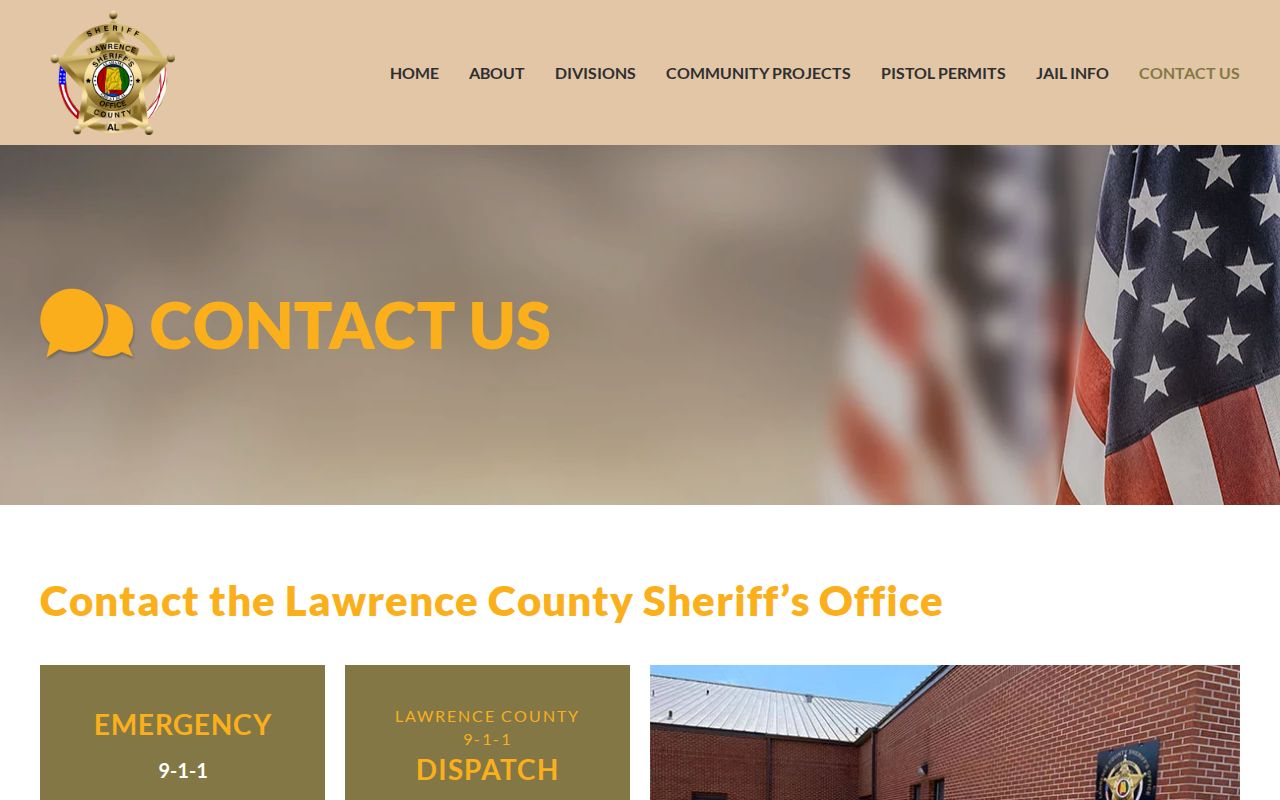
Phone beats guesswork here. Sheriff Communications maintains county arrest warrants for law-enforcement service, at (256) 974-9291. The sheriff main office is (256) 974-2500 at 242 Parker Road, Moulton, AL 35650. The sheriff site advises anyone with a suspected warrant to appear at the department. A lawyer can help plan safe, lawful steps before that visit. Court records offer another route. The Lawrence County Circuit Clerk keeps District and Circuit Court records through criminal, traffic, juvenile, and warrant divisions. Call (256) 974-2432 or go to 14451 Market Street, Suite 300, Moulton, AL 35650. Jurisdiction matters. A city matter belongs first with the Moulton, Courtland, Town Creek, North Courtland, or Hillsboro Municipal Court.
Sending a Most Wanted Tip Safely
Lawrence County has no Crime Stoppers partnership, anonymous reward line, or most-wanted tip portal. Don't send sensitive claims through a random form just because it carries the county name. Call 911 for immediate danger. For non-emergency sheriff information, use the agency's verified numbers.
Safety: Do not approach or try to detain anyone; give factual information directly to the proper law-enforcement agency.
A useful tip sticks to what you personally observed. Give the when, the where, and a way for the agency to follow up. Skip social media. No locations, private identifiers, or accusations posted there. The agency decides how a tip fits its investigation or warrant.
Unserved Lawrence County Arrest Warrants
The Lawrence County magistrates page says it plainly: an arrest warrant is not public until served. That rule separates a public most-wanted roster from an operational warrant file. A magistrate may issue a warrant after a sworn deposition and a finding of probable cause. Public access does not necessarily begin at issuance. The terms matter. Issued means the judicial officer authorized the process. Served means an officer executed it on the named person. Returned means service details went back to the clerk, and recalled or quashed means the court withdrew the warrant. Only the issuing court can explain those terms on a current Lawrence County docket.
How Most Wanted Differs From an Active Warrant
A most-wanted page and an active warrant are not the same thing in Lawrence County. The first is publicity; the second is a real court order, and that difference matters most when no public list exists and you need to check your own standing.
| Record or program | Purpose | What absence means |
|---|---|---|
| Most-wanted feature | A selective agency publication, if offered | Nothing about warrants not chosen |
| Active warrant | Court process not yet served, recalled, or cleared | May be restricted or held elsewhere |
| Court case record | Docket events and filed documents under access rules | May not expose a warrant-only status |
| Sheriff service file | Operational process maintained for service | Requires direct agency confirmation |
Alabama posts no statewide warrant database for the public. Just One Look offers on-demand case access, so Lawrence County readers cannot treat it as a wanted feed.
Lawrence County Roundup Claims
Lawrence County runs no warrant roundup, amnesty event, or safe-surrender campaign, and no county fee-waiver program is on offer. So treat any date, eligibility rule, or promise of on-the-spot recall with real doubt. A defensive-driving course in Moulton and the state traffic resolution system do exist, but they are ordinary case-resolution paths, not countywide forgiveness. A roundup announcement can still come later. When one does, check it against the issuing agency's own site before you act. Read the event dates, the eligible courts and charges, what identification to bring, and the payment or bond terms. Look for exclusions too, and whether a warrant is recalled at once or only after a judge signs off. A social-media repost can leave out exactly the terms that matter most.
Lawrence County City Warrant Boundaries
A municipal warrant usually stays with the city court that issued it. Moulton posts detailed municipal procedures of its own. Courtland, Town Creek, and North Courtland each offer some way to pay or handle a citation. Hillsboro has a courtroom, though no official city web lookup. None of that adds up to a Lawrence County most-wanted roster. A city payment portal is not a wanted list either. It can find an eligible citation by number, take your money, and hand you a receipt. Whether a warrant or capias actually exists, and whether payment or an appearance recalled it, is something only the city clerk can confirm. The Lawrence County city court warrant route lays out the local contacts and their limits.
When You Believe You Are Listed
The sheriff's official bond instructions explain local release channels after arrest.
A bond page helps you resolve a case. It does not prove anyone has a warrant. Skip the screenshots, copied names, and commercial search results; they prove nothing. Save the source and the date instead, then call a lawyer and the issuing court. A county warrant claim goes to the Lawrence County Sheriff's Office through its verified channels, while a municipal case belongs with that city's clerk. Ask for the warrant or case number, the issuing court, the current status, any bond or appearance terms, and the permitted way to respond.
- Confirm that the source is an official court or law-enforcement agency.
- Do not contact or confront a person named in any alleged listing.
- Have counsel verify the warrant and discuss a safe appearance or surrender.
- Follow only the issuing court's bond, payment, hearing, or recall directions.
- Obtain later confirmation that the court and service record were updated.
Important: A possible warrant can lead to arrest; speak with counsel before making an unplanned in-person visit.
Lawrence County Public Access Limits
Alabama's public-records law, Ala. Code § 36-12-40, recognizes a general right of access to public writings, but statutory exceptions carve out plenty. Court rules and clerk practices shape what court files you can see. Juvenile court and child law-enforcement records carry added confidentiality protections. Those boundaries mean a public web search can never stand in for a full status check. Federal wanted programs sit outside this entirely. A U.S. Marshals matter or a federal court case is not a Lawrence County sheriff list, and PACER docket access is not a Lawrence County warrant search. Take a federal question to the federal court involved, the U.S. Marshals, or a lawyer. The sound local method stays plain. Name the issuing jurisdiction, use official contact information, and verify the record with the court or sheriff that keeps it. Public-interest information should lead toward safe resolution, not speculation about private people.